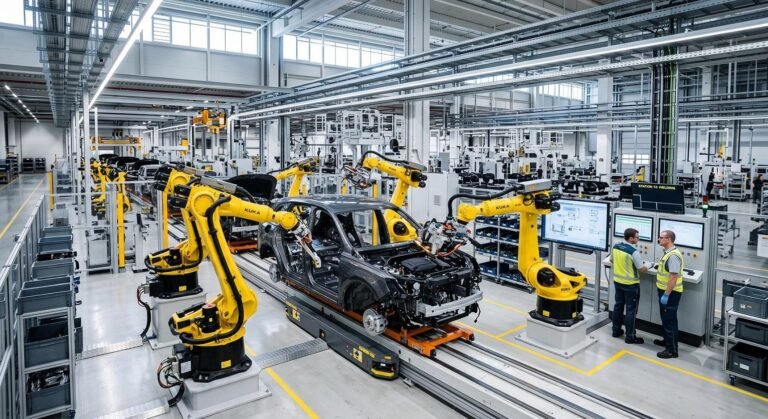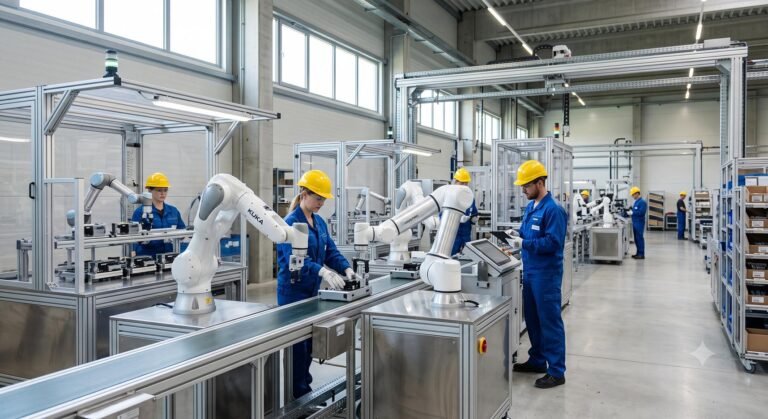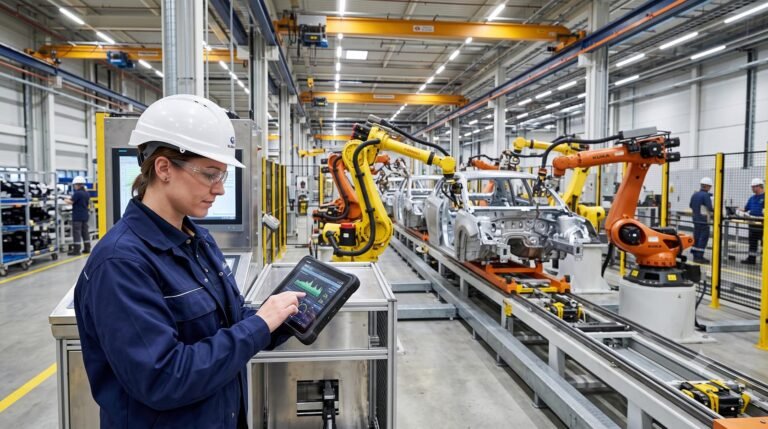

LONDON, UNITED KINGDOM — September 17, 2026 (ACI Newswire) — Industrial manufacturers globally are structurally adjusting their production methods to reduce environmental impacts, responding directly to tightening regulatory frameworks and shifting supply chain demands. Facility operators across North America, Europe, and the Asia-Pacific region are redirecting capital expenditures toward energy-efficient machinery, closed-loop water systems, and alternative raw materials. This shift moves sustainable production from a niche corporate initiative to a baseline operational requirement.
Analysts monitoring industrial output note that the transition is accelerating largely due to external economic pressures rather than internal corporate mandates alone. Major buyers in the automotive, electronics, and consumer goods sectors are enforcing strict carbon limits on their suppliers. Consequently, manufacturers that fail to modernize their operations risk losing lucrative contracts.
Regulatory Frameworks Drive Industrial Compliance
National and international policies serve as the primary catalyst for the current restructuring in global manufacturing. The implementation of the European Union’s Carbon Border Adjustment Mechanism (CBAM) has fundamentally altered how multinational manufacturers calculate production costs. By placing a tariff on carbon-intensive goods entering the EU, the policy forces manufacturers in Asia and the Americas to either decarbonize their processes or face steep financial penalties at the border.
Similar regulatory developments are occurring across other major markets. In the United States, climate disclosure rules and localized environmental mandates require publicly traded companies to audit and report their climate-related risks. These reporting obligations cascade down to private suppliers, who must now provide accurate emissions data to their corporate clients.
Manufacturing leaders are responding by treating emissions accounting with the same rigor as financial accounting. Plant managers are installing sensors and software systems to track energy consumption, waste generation, and resource utilization in real time. This data allows companies to baseline their current environmental impact and set measurable reduction targets to satisfy both regulators and investors.
Energy Transition Within Factory Operations
The most immediate operational change occurring on factory floors is the shift in energy procurement and consumption. Industrial facilities historically relied on centralized, fossil-fuel-based power grids. Today, a growing percentage of manufacturers are integrating localized renewable energy infrastructure directly into their operations.
Large-scale facilities are installing rooftop solar arrays and investing in nearby wind projects to stabilize energy costs and reduce reliance on volatile fossil fuel markets. Manufacturers are also executing long-term Power Purchase Agreements (PPAs) with renewable energy developers, securing clean electricity at fixed rates for decades. This strategy provides financial predictability while instantly lowering a facility’s operational carbon footprint.
Beyond generation, manufacturers are optimizing how energy is consumed within the plant. Upgrading legacy pneumatic systems, installing high-efficiency industrial motors, and replacing outdated HVAC infrastructure often yield double-digit percentage drops in total energy use. Thermal processes, which require intense heat for chemical reactions or material shaping, present a tougher challenge. However, early adopters are beginning to replace natural gas boilers with industrial heat pumps and electric arc furnaces.
Tackling Scope 3 Emissions Across Supply Chains
While factory-level improvements address direct emissions, the largest environmental impact for most manufacturers resides in their supply chains. These indirect impacts, known as Scope 3 emissions, often account for more than 70 percent of a product’s total carbon footprint. Original equipment manufacturers (OEMs) are now evaluating their tier-one and tier-two suppliers based on environmental performance metrics.
Tracking Scope 3 emissions requires unprecedented transparency between competing businesses. Manufacturers are deploying blockchain-based ledgers and specialized carbon-accounting platforms to trace raw materials from the extraction point to the final assembly line. If a steel supplier or a plastics manufacturer cannot provide verified emissions data, buyers are increasingly sourcing alternative vendors.
This pressure is forcing mid-market manufacturers to adopt green manufacturing practices simply to retain their enterprise clients. The dynamic creates a ripple effect, pushing sustainable operational standards deeper into emerging markets where environmental regulations may otherwise remain lax.
The Circular Economy and Waste Reduction Targets
Traditional manufacturing operates on a linear model: extract raw materials, produce goods, and discard the waste. The industry is currently migrating toward a circular economic model designed to keep materials in use for as long as possible. Industrial facilities are re-engineering production lines to minimize scrap, recycle offcuts, and utilize recycled inputs instead of virgin commodities.
Water conservation represents a critical component of this circular approach, particularly in regions facing acute water scarcity. Semiconductor fabricators, textile plants, and food processing facilities use vast quantities of water daily. To mitigate risk, plant operators are installing closed-loop water filtration systems that capture, clean, and reuse industrial wastewater. These systems reduce municipal water drawdowns and lower the volume of contaminated effluent discharged into local ecosystems.
Product design is also evolving to support the circular economy. Engineers are prioritizing modular designs, allowing end-users to repair or upgrade specific components rather than replacing the entire product. Manufacturers are concurrently substituting toxic solvents and single-use packaging with biodegradable or endlessly recyclable alternatives, preparing for impending extended producer responsibility (EPR) laws.
Decarbonizing Heavy Industries: Steel and Cement
The push for green manufacturing faces its steepest technical hurdles in heavy industries like steel, cement, and chemical production. These sectors rely on chemical reactions that inherently release carbon dioxide, making them difficult to decarbonize through renewable electricity alone. Despite the challenges, capital is flowing into pilot projects aimed at reforming heavy industrial processes.
In the steel sector, manufacturers are transitioning away from traditional blast furnaces that burn metallurgical coal. Investments are currently focused on Direct Reduced Iron (DRI) processes powered by green hydrogen. While green hydrogen remains expensive and scarce, heavy industry conglomerates are forming consortiums to fund the necessary infrastructure, betting that economies of scale will eventually lower the fuel’s cost.
The cement industry, responsible for approximately eight percent of global carbon dioxide emissions, is actively adjusting its formulas. Producers are testing alternative clinkers and integrating industrial byproducts, such as fly ash and slag, into their mixes to reduce the carbon intensity of concrete. Additionally, early-stage carbon capture and storage (CCS) technologies are being retrofitted onto existing cement kilns to trap emissions before they enter the atmosphere.
Regional Shifts: North America, Europe, and Asia-Pacific
The transition toward green manufacturing practices varies significantly by region, shaped by local policy incentives and available infrastructure. Europe currently maintains the most aggressive timeline for industrial decarbonization. Supported by robust carbon pricing mechanisms and public funding directives, European manufacturers lead in adopting alternative fuels and closed-loop material systems.
In North America, the transition is largely driven by federal tax incentives and grants. Policies designed to reshore critical supply chains are heavily weighted toward clean energy projects. Industrial firms in the United States are utilizing these tax credits to modernize aging facilities, focusing heavily on energy efficiency upgrades and electrification.
The Asia-Pacific region presents a complex landscape. As the world’s manufacturing hub, the region accounts for the largest share of global industrial output. While some developing nations continue to prioritize rapid industrialization over emissions reductions, regional leaders like Japan and South Korea are establishing strict industrial efficiency targets. Furthermore, export-heavy markets are rapidly greening their operations specifically to maintain access to European and North American buyers.
Economic Implications of Sustainable Production
Transitioning to green manufacturing requires substantial upfront capital expenditure. Plant operators must balance the immediate costs of retrofitting machinery against the long-term operational savings generated by energy efficiency and waste reduction. Financial institutions are facilitating this shift by offering sustainability-linked loans, which provide favorable interest rates to companies that meet predefined environmental targets.
Initially, products manufactured using sustainable methods often carry a “green premium”—a higher market price compared to conventionally produced equivalents. However, industry data indicates this premium is shrinking as sustainable technologies scale. In sectors like aluminum and automotive parts, the cost differential is nearly negligible, driving broader market acceptance.
Market analysts suggest that the financial risks of inaction now outweigh the costs of adaptation. Manufacturers that delay investments in green practices face exposure to carbon taxes, volatile fossil fuel prices, and the loss of major corporate contracts. Consequently, proactive investments in sustainable production are increasingly viewed as standard risk management rather than purely environmental stewardship.
Looking Ahead: The Baseline for Future Manufacturing
The integration of green manufacturing practices represents a permanent structural shift in global supply chains. As regulatory frameworks mature and corporate buyers demand tighter emissions controls, sustainable production methods will transition from a competitive differentiator to a basic market requirement.
Industrial engineering firms continue to develop more efficient electric machinery, while software providers refine the tools necessary to audit multi-tier supply chains. The success of this global industrial pivot relies heavily on the continued deployment of renewable energy grids and the commercialization of low-carbon materials for heavy industry.
Manufacturers navigating this transition must maintain flexibility, adapting to both technological advancements and shifting trade policies. Ultimately, the future of industrial production depends on the sector’s ability to decouple economic output from environmental degradation.
About ACI Newswire
ACI Newswire is a global press release distribution and financial communications platform. We connect corporate communicators, financial institutions, and industrial organizations with journalists, analysts, and institutional investors worldwide. ACI Newswire provides content syndication and multimedia distribution services across major financial hubs, ensuring corporate announcements reach relevant professional audiences through established media networks and market terminals.
Suggested Media Contact:
ACI Newswire
contact@acinewswire.com