
Journalists, editors, and news producers delete hundreds of emails every single day. A crowded newsroom leaves zero margin for error, meaning a poorly constructed press release rarely gets a second glance.
When an announcement fails to generate media coverage, companies often blame a slow news cycle or a lack of media contacts. In reality, the problem usually lies in the copy itself. Most press releases are ignored because they read like internal corporate memos rather than actual news.
This guide examines the most common press release mistakes, explaining exactly why they alienate the media and how you can fix them.
What is a Press Release?
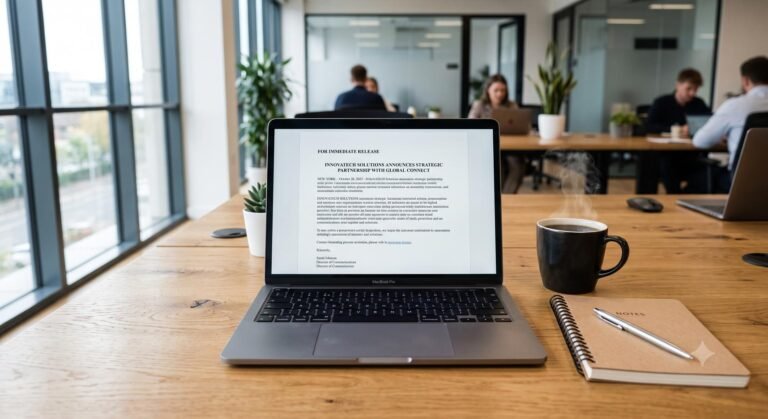
A press release is an official, written announcement sent to the media to report a specific, highly newsworthy event. Its primary purpose is to provide journalists with the basic facts they need to write a news story, including who, what, when, where, and why the event matters.
Why Press Release Quality Matters
The media industry operates on tight deadlines. Reporters do not have the time to decipher complex industry jargon, dig for missing contact information, or figure out why an announcement matters to their readers.
A well-written press release builds trust with the media. It shows that you respect a reporter’s time and understand their audience. Conversely, a bad press release damages your brand’s credibility. If an editor associates your company with hyperbolic, disorganized, or non-newsworthy pitches, they will simply block your email address.
12 Common Press Release Mistakes to Avoid
Understanding what not to do is the fastest way to improve your media outreach. Here are the most frequent errors companies make when writing and distributing announcements.
1. Burying the Lead
In journalism, the “lead” (or lede) is the most important part of the story. It is the opening sentence that tells the reader exactly what happened.
Companies often make the mistake of starting a press release with paragraphs of background information, company history, or industry commentary before finally stating the actual news on page two.
The Fix: Use the inverted pyramid method. Put the most critical information at the very top. If a journalist only reads your first paragraph, they should still understand exactly what your company did and why it matters. Save the background details for the final paragraphs.
2. Writing for the Boardroom, Not the Public
Corporate executives love industry jargon. Journalists hate it. Words like “synergy,” “optimization,” “paradigm,” and “ideation” mean nothing to the general public. When a press release is stuffed with technical terminology, the reporter has to translate it into plain English, which creates extra work.
The Fix: Write exactly how you would speak to a friend. If a middle school student cannot understand your announcement, it is too complex.
| Corporate Jargon | Plain English |
| “Company X has initiated a synergistic partnership to optimize deliverables.” | “Company X partnered with Company Y to speed up deliveries.” |
| “We are empowering consumers through a unified, holistic platform.” | “Our new app lets users manage all their accounts in one place.” |
| “The initiative will facilitate enhanced operational efficiencies.” | “The program will save the company $2 million a year.” |
3. Missing the “Newsworthy” Element
Not everything a company does is news. A minor software update, a slight logo redesign, or a routine internal promotion usually does not warrant a full press release.
Sending out non-news trains journalists to ignore your future emails. If a reporter opens your pitch and realizes it is just an advertisement in disguise, you lose credibility.
The Fix: Before writing, ask yourself: Does anyone outside of our building care about this? True news impacts people. It involves significant financial milestones, major product launches, community impact, or hard data that shifts industry trends.
4. Overusing Quotes That Say Nothing
A quote in a press release should provide a human perspective, an opinion, or an emotional reaction. Unfortunately, most corporate quotes are completely robotic.
Bad Example: “We are incredibly thrilled and excited to announce this launch, which represents our commitment to excellence and customer satisfaction,” said John Doe, CEO.
That quote provides zero new information. It is purely filler.
The Fix: Use quotes to explain why the news matters, not just to express excitement.
Good Example: “This new manufacturing plant will create 300 local jobs and reduce our shipping delays by two weeks,” said John Doe, CEO.
5. Ignoring Formatting Standards
Journalists expect press releases to follow a specific format. When a document lacks a dateline, media contact information, or a clear “FOR IMMEDIATE RELEASE” tag, it looks unprofessional.
The Fix: Stick to the traditional layout.
-
FOR IMMEDIATE RELEASE: Placed at the top left.
-
Headline: Centered, bold, and concise.
-
Dateline: City, State, Date (e.g., CHICAGO, IL – October 12, 2024).
-
Body: Short paragraphs.
-
Boilerplate: A short “About the Company” section at the bottom.
-
Media Contact: Name, email, and phone number.
-
End Mark: Three hash marks (###) centered at the bottom to indicate the end of the text.
6. Lengthy, Rambling Copy
A press release is not a white paper or a blog post. If your announcement drags on for three pages, no one will read it.
The Fix: Keep it to one page, or roughly 400 to 500 words. Stick strictly to the facts. If a reporter wants more background information, they will contact you to ask for an interview.
7. Errors in Grammar and Facts
Nothing destroys credibility faster than typos, misspelled names, or incorrect dates. If a journalist copies your misspelled information into their article, it reflects poorly on their publication.
The Fix: Never publish the first draft. Have at least two other people proofread the document specifically for names, dates, links, and financial figures. Read the text out loud to catch awkward phrasing.
8. Poor Headline Construction
The headline is the first thing an editor sees in their inbox. If it is vague, overly clever, or too long, the email gets deleted.
The Fix: Write headlines like news alerts. Keep them under 100 characters. Use active verbs. Avoid capitalization of every single letter (ALL CAPS).
| Bad Headline | Good Headline |
| ACME CORP ANNOUNCES EXCITING NEW QUARTERLY FINANCIAL RESULTS FOR Q3 | Acme Corp Reports Record $50M Q3 Revenue |
| A New Era in Software Begins Today | TechCo Launches Cloud Security App for Small Businesses |
| Local Hospital Wins Award | Mercy Hospital Named Top Cardiac Center in Ohio |
9. Missing or Generic Media Contact Info
If a reporter decides to cover your story, they usually need to speak with someone quickly to verify facts or get a custom quote. If your media contact is simply “info@company.com” or a general 1-800 number, the journalist will likely pass on the story.
The Fix: Always include the name, direct email address, and direct phone number of a specific person handling PR. That person must be available to answer their phone on the day the release goes out.
10. Hyperbole and Exaggeration
Words like “groundbreaking,” “first-of-its-kind,” “world-class,” and “best” are red flags to journalists. The media’s job is to remain objective. They cannot publish an article claiming your product is the “best” unless there is independent data to prove it.
The Fix: Delete the adjectives. Stick to the nouns and verbs. Let the facts speak for themselves. If your software is actually the fastest on the market, provide the speed test data rather than just calling it “groundbreaking.”
11. Attaching Massive Files
Sending a press release as a 10MB PDF attachment or including huge image files will often trigger a newsroom’s spam filter. Even if it gets through, journalists do not like downloading unknown attachments.
The Fix: Paste the text of your press release directly into the body of your email. If you have high-resolution photos or a press kit, include a simple link to a Dropbox or Google Drive folder where the reporter can download the assets if they want them.
12. Failing to Localize or Target the Pitch
A technology reporter at a national outlet does not care about a local restaurant opening. A local newspaper editor does not care about a minor software update in another state. Mass-emailing the exact same press release to every journalist you can find is an ineffective strategy.
The Fix: Target your distribution. If the news is local, send it to local papers and TV stations. If it is industry-specific, send it to trade publications. Personalize your email pitch to explain why the specific reporter’s audience will care.
Best Practices Checklist
Before finalizing your next announcement, run it through this simple checklist.
| Check | Element | Standard |
| [ ] | Headline | Under 100 characters, active voice, factual. |
| [ ] | Dateline | City, state, and exact date included. |
| [ ] | The Lead | The most important news is in the first sentence. |
| [ ] | Length | Under 500 words (fits on one page). |
| [ ] | Quotes | Sounds human; adds perspective, not just fluff. |
| [ ] | Jargon | Technical terms removed or clearly defined. |
| [ ] | Contact | Specific person’s name, direct email, and phone number. |
| [ ] | End Mark | Ends with “###” to signal the document is complete. |
Key Takeaways
-
Be factual, not promotional: Journalists want news, not advertisements. Drop the adjectives and hyperbole.
-
Format matters: Use clear headlines, datelines, and standard PR formatting to look professional.
-
Prioritize the first paragraph: Put the who, what, when, where, and why at the very top.
-
Write for humans: Remove corporate jargon so the general public can easily understand your announcement.
-
Provide direct contact info: Make it easy for reporters to reach a real person immediately.
Frequently Asked Questions
How long should a press release be?
A standard press release should be between 300 and 500 words. It should comfortably fit on a single printed page. Keep the text focused strictly on the facts of the announcement.
What is the best time to send a press release?
Generally, Tuesday through Thursday mornings (between 8:00 AM and 10:00 AM local time) are considered the most effective times to distribute news. Avoid Friday afternoons, as newsrooms are wrapping up for the week and your email is likely to be buried by Monday morning.
Do press releases still work for SEO?
Press releases can provide indirect SEO benefits. While links distributed through standard wire services are usually “nofollow” (meaning they don’t directly boost search rankings), a well-written release can lead to organic media coverage. When journalists write original articles about your news and link back to your site, those organic links are highly valuable for SEO.
Should I include images in my press release?
Yes, multimedia increases the chances of coverage. However, do not attach large image files directly to the email. Instead, include a link to a cloud folder containing high-resolution, professional photos or logos.
What is a dateline?
A dateline is the text at the very beginning of the first paragraph of a press release. It states the city and state where the news is originating, followed by the date. Example: (NEW YORK, NY – November 4, 2024).
How do I make my press release stand out?
The best way to stand out is by having a genuinely newsworthy story and a clear, factual headline. Avoid marketing fluff. Provide hard numbers, clear impacts, and direct quotes that add a human element to the story.
What is a boilerplate?
A boilerplate is a short paragraph at the very bottom of a press release titled “About the Company.” It provides basic background information about who the company is, what it does, and a link to the company website.
Can I send a press release as a PDF?
It is best to avoid PDFs. Journalists prefer to copy and paste text directly. Paste your press release directly into the body of your email so it can be read instantly on a phone or desktop without opening an attachment.
How many quotes should a press release have?
One or two quotes are usually sufficient. Keep them brief. Provide one quote from a company executive and, if applicable, one quote from a partner, customer, or industry expert to add third-party validation.
Who should be the media contact?
The media contact must be someone who knows the details of the announcement and is available to answer their phone and email immediately after the release is distributed. This is usually a PR manager, communications director, or in smaller companies, a founder or executive.
Conclusion
Securing media coverage requires thinking like a journalist rather than a marketer. By removing jargon, avoiding hyperbole, and sticking strictly to the facts, you make it significantly easier for reporters to do their jobs.
Review every press release through an objective lens. If the announcement provides genuine value, follows standard formatting, and respects the reader’s time, you will build lasting credibility with the media and vastly improve your chances of publication.