
NEW YORK, UNITED STATES — July 20, 2026 (ACI Newswire) — Corporate investment in digital infrastructure is shifting from experimental deployments to systemic integration across global markets. As enterprises finalize their operational strategies for the coming fiscal cycles, a distinct pivot is occurring. Industry analysts observe organizations moving away from adopting technology for its own sake, focusing instead on measurable returns across enterprise architecture, automation, and risk management.
This maturation in enterprise technology marks a new phase in corporate modernization. The current landscape requires chief information officers and technology leaders to align software and hardware investments directly with revenue retention, operational efficiency, and regulatory compliance.
The following digital transformation trends highlight where major corporations are directing their capital and human resources to maintain competitive parity.
The Shift Toward Applied Artificial Intelligence
For the past several years, generative artificial intelligence dominated corporate discussions and initial technology budgets. Currently, enterprises are transitioning from broad, experimental AI applications toward applied artificial intelligence designed for specific operational outcomes.
Rather than deploying standalone chatbots, organizations are embedding machine learning models directly into back-office functions. This includes predictive maintenance in manufacturing, automated supply chain routing, and algorithmic financial forecasting. Technology analysts report that companies are prioritizing smaller, domain-specific AI models over massive, generalized networks.
These tailored models require less computing power to run and offer higher accuracy for specialized industry tasks. Consequently, businesses are seeing faster returns on their AI investments while minimizing the risk of generating inaccurate data or compromising proprietary corporate information.
Hybrid Cloud Architecture and Cost Optimization
Cloud computing remains the foundation of enterprise modernization, but the approach to cloud infrastructure has fundamentally changed. The initial rush to move all workloads to public cloud providers has settled into a more measured, hybrid approach.
Many organizations are practicing cloud repatriation, moving specific, high-cost, or highly sensitive workloads back to on-premises data centers or private clouds. This trend is largely driven by FinOps—cloud financial management—as companies seek to control escalating monthly computing expenses.
By utilizing hybrid and multi-cloud environments, businesses prevent vendor lock-in and optimize their infrastructure costs. IT departments are now auditing their architecture to determine the most cost-effective environment for each application, balancing the flexibility of the public cloud with the predictable pricing of private servers.
Zero Trust Security as a Business Imperative
As digital perimeters disappear, traditional cybersecurity frameworks are proving insufficient against modern threats. The adoption of remote work environments and interconnected supply chains has forced businesses to adopt Zero Trust security architectures.
Zero Trust operates on the principle that no user or device is trusted by default, regardless of whether they are inside or outside the corporate network. Every access request is continuously authenticated, authorized, and validated. This model relies heavily on multi-factor authentication, identity and access management, and micro-segmentation of corporate networks.
Cybersecurity is no longer viewed solely as an IT problem; boards of directors now treat it as a primary business risk. A single breach can severely impact market valuation and customer trust. Therefore, embedding Zero Trust protocols into all new digital transformation initiatives is now a standard requirement for enterprise compliance.
Hyperautomation and Workforce Augmentation
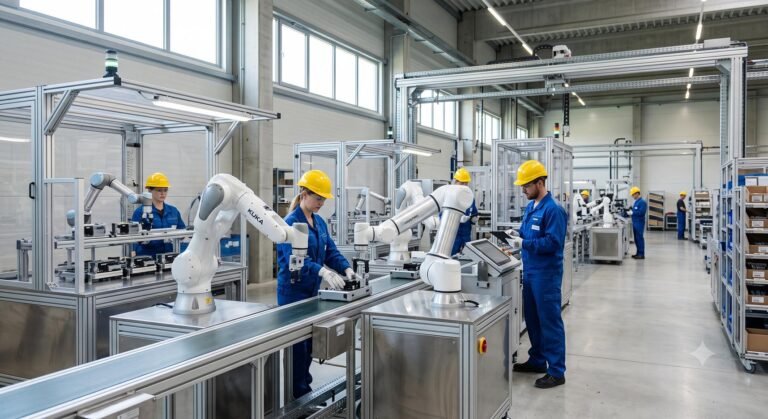
To combat labor shortages and increase operational margins, companies are investing heavily in hyperautomation. This discipline involves identifying, vetting, and automating as many business and IT processes as possible.
Hyperautomation combines robotic process automation (RPA) with machine learning and intelligent document processing. Instead of automating a single repetitive task, organizations are automating complex workflows that span multiple departments. For example, an automated system can now intake a vendor invoice, verify the pricing against the original contract using AI, and schedule the payment without human intervention.
This trend is not strictly about replacing human workers. Enterprise research indicates that companies are using hyperautomation for workforce augmentation, removing administrative burdens so employees can focus on strategic decision-making and client relations.
Data Sovereignty and Regulatory Compliance
Data privacy regulations are becoming increasingly complex across global jurisdictions. With the continued enforcement of frameworks like the General Data Protection Regulation (GDPR) in Europe and varying state-level laws in the United States, data sovereignty has become a major architectural concern.
Data sovereignty dictates that digital information is subject to the privacy laws of the country where it is physically collected or stored. Multinational corporations must now design their data architecture to ensure regional information remains within specific geographic borders.
Failure to comply with these regulations results in severe financial penalties and operational disruptions. As a result, chief data officers are prioritizing localized data centers and advanced encryption methods as essential components of their digital transformation roadmaps.
The Sustainability Imperative in IT
Environmental, social, and governance (ESG) reporting is significantly influencing technology procurement. The energy consumption required to power large-scale data centers and train complex AI models has drawn scrutiny from regulators and investors.
Enterprises are incorporating green IT practices into their digital strategies to reduce their carbon footprint. This includes optimizing code to run more efficiently, extending the lifecycle of corporate hardware, and selecting cloud providers that operate on renewable energy.
Tracking and reporting the environmental impact of digital operations is becoming a standardized practice. Companies that can demonstrate sustainable digital growth often receive favorable terms from institutional investors and better positioning in public sector procurement processes.
Industry Context and Market Outlook
The macroeconomic environment continues to influence how organizations execute their digital strategies. High interest rates and persistent inflation have compressed corporate margins, forcing technology leaders to justify every digital initiative with a clear business case.
Digital transformation is no longer a finite project with an end date; it is a permanent state of operational evolution. Companies that successfully navigate these trends share a common trait: they integrate technology planning with their core business objectives rather than treating IT as an isolated support function.
Looking ahead, the divide between digitally mature organizations and technological laggards is expected to widen. Businesses that strategically deploy applied AI, optimize their cloud architecture, and secure their data will secure a distinct operational advantage in the global market.
Overall, the mandate for modern enterprises is clear. Technology investments must deliver tangible efficiency, absolute security, and sustainable growth.
About ACI Newswire
ACI Newswire is a leading global distributor of financial, business, and enterprise technology news. Serving media outlets, investors, and corporate professionals, ACI Newswire delivers verified, high-quality editorial content that drives industry conversations. Committed to journalistic integrity and accurate market reporting, ACI connects modern organizations with the audiences that matter most.
Suggested Media Contact:
ACI Newswire
contact@acinewswire.com