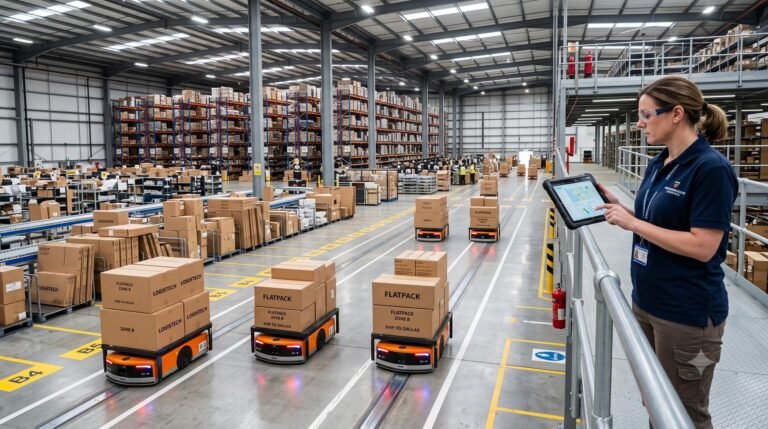

NEW YORK — July 17, 2026 — (ACI Newswire) — Retailers worldwide are aggressively expanding their unified commerce capabilities as consumer expectations shift toward deeply integrated shopping experiences. In 2026, omnichannel retail strategies have transitioned from optional upgrades to operational requirements. Companies that successfully merge their physical and digital sales channels are reporting significant gains in customer retention and lifetime value, prompting a widespread restructuring of retail technology investments.
Unified Commerce Transitions to a Market Mandate
Retail infrastructure has evolved beyond basic multi-channel selling. The industry standard now demands unified commerce platforms that synchronize inventory, pricing, and promotions in real time across all customer touchpoints. Without a centralized view of available stock, retailers face increased cart abandonment and customer frustration.
According to recent market analyses, the global omnichannel retailing market reached an estimated $11.57 billion in 2026, growing at a compound annual growth rate (CAGR) of 14.2 percent. This expansion is heavily driven by the integration of point-of-sale systems, e-commerce platforms, and warehouse management software. Order fulfillment methods like buy-online-pickup-in-store (BOPIS) and ship-from-store are now baseline consumer expectations, compelling brands to maintain strict inventory accuracy. Data shows that omnichannel shoppers generate a lifetime value 1.7 times higher than single-channel buyers, solidifying the financial imperative for integrated operations. Retailers are increasingly adopting headless commerce and API-first architectures to ensure rapid data flow between consumer-facing applications and backend logistics.
Predictive Artificial Intelligence Replaces Reactive Marketing
Artificial intelligence is altering how retailers approach personalization. Rather than recommending products based solely on past purchases, advanced algorithms now analyze behavioral patterns, browse intent, and contextual signals to anticipate future needs. Marketing teams are deploying predictive analytics to inform decisions on email content, text message timing, and in-store associate prompts.
This predictive capability reduces the noise of mass marketing. Retailers focus on continuity across channels, ensuring that a customer who views an item on a mobile app receives relevant follow-up content rather than repetitive advertisements for already purchased goods. According to industry forecasts, 80 percent of marketing interactions in 2026 involve AI-driven personalization, establishing it as a core component of modern customer engagement. Dynamic pricing algorithms also optimize promotions in real time based on demand, local inventory levels, and customer loyalty tiers.
Physical Stores Evolve Into Experiential Hubs
The rise of digital channels has not rendered brick-and-mortar locations obsolete. Instead, physical stores are functioning as relationship engines and fulfillment nodes. Retailers are remodeling their real estate to host exclusive events, facilitate in-person services, and provide interactive product demonstrations.
This shift addresses the widespread consumer practice of “webrooming”—researching items online before purchasing them in a physical location. By equipping store associates with mobile management applications and access to unified customer profiles, retailers bridge the digital-physical divide. A customer’s online browsing history can inform an in-store associate’s recommendations, elevating the quality of the interaction. Furthermore, BOPIS options drive additional foot traffic; up to 75 percent of customers utilizing in-store pickup make secondary purchases during their visit. Retailers are also introducing digital kiosks to physical showrooms, which typically generate a 20 to 30 percent higher average order value compared to standard floor purchases.
Mobile Interfaces Dominate the Transaction Journey
Mobile commerce remains the primary interface for retail interactions in 2026. Consumers routinely browse and purchase via smartphones, prompting brands to refine mobile checkout flows. Market data indicates that 72 percent of e-commerce transactions currently occur on mobile devices. Cumbersome payment entries historically hindered mobile conversion rates, but retailers are addressing this barrier by integrating digital wallets, biometric authentication, and one-tap checkout features.
Push notifications and location-based messaging further enhance the mobile experience. Retail apps now deliver timely order updates and trigger relevant promotional offers when a user enters a specific geographic area. Augmented reality (AR) technology also bridges the digital confidence gap, allowing customers to visualize products in their real-world environments through smartphone cameras before finalizing a purchase. Companies that fail to optimize their mobile interfaces risk losing market share to competitors with more agile, user-friendly digital environments.
Social Commerce Matures Into Full-Funnel Purchasing
Social media platforms have transitioned from simple brand discovery tools to comprehensive retail channels. Short-form video content and live shopping events now facilitate the entire consumer journey, from initial consideration to final transaction.
Retailers are engineering direct purchasing pathways within social applications, allowing users to buy products with minimal friction. A click from a creator’s video directs the consumer to a tailored checkout process that reflects their specific engagement, rather than a generic landing page. This targeted approach improves conversion rates and capitalizes on high-intent browsing behaviors.
Data Synchronization and Privacy Elevate the Shopping Journey
As third-party tracking mechanisms decline, retail media networks rely heavily on first-party data. Brands prioritize capturing high-quality, consented customer profiles to activate across on-site and off-site messaging.
A unified customer data platform consolidates information from website visits, physical transactions, and customer service inquiries. This single-record approach allows retailers to deploy highly targeted campaigns without violating consumer privacy expectations. Companies utilizing consolidated data systems report an 89 percent customer retention rate, vastly outperforming organizations operating with fragmented, channel-specific profiles.
Industry Context: The Macroeconomic Impact of Unified Retail
The widespread adoption of omnichannel frameworks is structurally altering the global retail economy. The transition necessitates heavy investments in cloud-based software, supply chain logistics, and automated warehouse management. Retail giants are restructuring their fulfillment networks to prioritize proximity to the consumer, utilizing physical storefronts as micro-fulfillment centers.
This operational shift mitigates escalating freight costs and long-distance shipping delays. Furthermore, the retail media sector is experiencing substantial growth as brands leverage their localized, first-party data to sell targeted advertising space within their digital ecosystems. As omnichannel systems mature, they provide executives with transparent, real-time analytics that improve demand forecasting and reduce excess inventory costs by 20 to 30 percent. The ability to orchestrate complex logistics while maintaining high customer satisfaction metrics separates market leaders from legacy retailers.
Conclusion
In 2026, omnichannel retail strategies rely on operational precision rather than the mere presence of multiple sales channels. Retailers are integrating their digital and physical assets to provide consistent pricing, accurate inventory visibility, and highly personalized customer interactions. As the market continues its rapid expansion, companies that prioritize data synchronization and proactive AI deployments are securing a distinct competitive advantage, resulting in sustained revenue growth and strengthened consumer loyalty.
About ACI Newswire
ACI Newswire is a premier global distributor of financial, business, and industry-specific press releases. Serving major corporations, public relations agencies, and financial institutions, ACI Newswire ensures critical business developments reach leading media outlets, investors, and newsrooms worldwide.
Media Contact:
ACI Newswire
contact@acinewswire.com