
NEW YORK, USA — August 18, 2026 (ACI Newswire) — The global e-commerce market continues to record substantial economic expansion, moving beyond traditional consumer retail to embed itself within enterprise supply chains and international trade infrastructure. Following a year in which total market valuation surpassed $33.8 trillion in 2025, aggregate industry data projects the sector will reach approximately $39.6 trillion by the end of 2026. This upward trajectory represents a compound annual growth rate exceeding 21 percent, underpinned by increasing internet penetration, mobile application usage, and structural shifts in business-to-business procurement. Market momentum currently stems from modernized financial technology, sophisticated logistics networks, and widespread regional adoption.
Market Valuation and Structural Expansion
The digital commerce landscape has matured into a multi-tiered economic engine. While business-to-consumer online retail garners significant public attention—accounting for roughly 21 percent of worldwide retail sales—the broader definition of e-commerce encompasses massive industrial and commercial transaction networks. These networks benefit from cross-border payment innovations, reduced friction in online transactions, and improved shipping capabilities.
Market trackers indicate there are currently over 28 million active e-commerce websites globally, with the United States hosting a significant percentage of these platforms. Infrastructure providers host a large portion of this digital real estate, lowering the barrier to entry for small and medium-sized enterprises. This democratization of digital retail ensures that the market is supported by a vast network of independent merchants contributing to the total transaction volume alongside major corporate entities.
The Ascendance of B2B Digitalization
Business-to-business transactions currently dominate the overall e-commerce ecosystem, holding a 46.7 percent share of the total transaction value. This segment handles bulk orders, standardized commodity purchases, and enterprise-level supply chain management. Companies are actively pursuing digital transformation initiatives aimed at improving procurement efficiency and cost transparency. By migrating wholesale purchasing to digital platforms, organizations lower their operational costs and establish stronger resilience against global supply disruptions.
Government mandates regarding electronic invoicing and digital taxation reporting further accelerate this transition. Manufacturers, healthcare providers, and heavy industry operators increasingly rely on supplier-distributor platforms to source materials and manage inventory levels. Financial analysts report that B2B subscription models are also gaining traction, providing predictable revenue streams for vendors while ensuring consistent supply for buyers. This institutional adoption provides a stable baseline for overall market valuation, insulating the industry from seasonal fluctuations typically seen in consumer retail.
Asia Pacific Consolidates Global Dominance
From a regional perspective, the Asia Pacific market maintains its position as the largest driver of global e-commerce revenue, capturing between 45 and 54 percent of the worldwide market share. This concentration of activity relies heavily on rapid urbanization, particularly within China, and a rising middle class across Southeast Asia and India. The widespread availability of affordable mobile data plans and low-cost smartphones allows millions of first-time digital consumers to participate in the online economy.
The market architecture in the Asia Pacific operates predominantly on a mobile-first framework. Consumers and businesses frequently utilize integrated platforms that combine messaging, social media, and direct purchasing capabilities. Social commerce, driven by live-streaming and influencer marketing, condenses the discovery-to-purchase cycle, yielding higher engagement rates among younger demographics. Furthermore, local governments and private enterprises continue to invest heavily in logistics infrastructure, enabling rapid delivery to previously inaccessible rural and semi-urban locations.
North America and Europe Navigate Fulfillment and Regulation
While the Asia Pacific leads in total volume, North America remains a highly lucrative market defined by advanced digital maturity and extensive fulfillment networks. United States e-commerce sales continue to climb, representing roughly 16.4 percent of total domestic retail transactions and reaching an estimated $1.23 trillion last year. Major marketplace operators continually expand same-day delivery services and integrate third-party seller ecosystems. The North American market is projected to grow at an annualized rate of nearly 19 percent, supported by high broadband penetration and established consumer trust in digital storefronts.
In Europe, cross-border trade serves as the primary catalyst for ongoing market expansion. The European Union’s single market framework harmonizes digital regulations, reducing customs barriers and simplifying tax compliance for online vendors. European consumers frequently purchase goods from neighboring countries, drawn by competitive pricing and specialized product availability. Environmental considerations also influence the European market more strongly than other regions, with shoppers actively supporting brands that utilize eco-friendly packaging and ethical supply chains.
Mobile Commerce and the Generational Shift
Mobile commerce acts as a distinct sub-sector within the broader digital economy, projected by retail analysts to reach $12.66 trillion in value over the next decade. The proliferation of smartphones—with global shipments reaching 1.46 billion units annually—ensures that consumers carry a digital storefront at all times. This accessibility alters shopping habits, particularly among younger demographics.
Recent consumer surveys indicate that Generation Z shoppers strongly prefer hybrid retail models. Nearly 49 percent of these younger consumers utilize “buy online, pick up in-store” services, blending the speed of digital transactions with the immediate fulfillment of physical retail. This omnichannel approach forces traditional brick-and-mortar retailers to upgrade their digital interfaces to accommodate fluid consumer behavior. Social media integration also plays a vital role, with platforms evolving into direct sales portals where users complete purchases directly through the app, compressing the sales funnel and increasing transaction frequency.
Payment Infrastructure and Embedded Finance
The maturation of digital payment systems acts as a critical enabler for e-commerce growth across all regions. Secure payment gateways, tokenization, and integrated financial services reduce cart abandonment rates and facilitate efficient transactions. Digital wallets have become the preferred payment method globally, accounting for 53 percent of online transactions. Concurrently, traditional credit and debit card usage is experiencing a measured decline as consumers opt for mobile-integrated payment solutions.
Embedded finance solutions, including buy-now-pay-later models and regional mobile banking systems, offer consumers greater purchasing flexibility without requiring traditional credit checks. These financial instruments are highly effective in emerging markets, where banking infrastructure may be limited but mobile penetration is high. Additionally, the implementation of artificial intelligence in fraud detection algorithms protects both merchants and consumers, reinforcing trust in digital commercial environments.
Artificial Intelligence Modernizes Retail Operations
Technological integration extends well beyond payment processing. Retailers and B2B platforms increasingly utilize artificial intelligence and machine learning algorithms to analyze consumer behavior and generate personalized product recommendations. This capability improves conversion rates by presenting users with highly relevant inventory based on their browsing history and demographic profiles.
A significant development within this sector is the transition toward agentic AI and autonomous shopping assistants. Rather than functioning merely as passive suggestion engines, these advanced systems actively monitor pricing fluctuations, compare specifications, and can execute purchases on behalf of the user. Customer support mechanisms have also undergone a digital transformation. Current market research shows 41 percent of online consumers prefer live chat interfaces for resolving service inquiries. By implementing AI-driven chatbots for initial contact, businesses reduce their reliance on large call centers while providing immediate responses to routine questions regarding shipping status or return policies.
Home Appliances and Electronics Command Consumer Spending
Within specific product categories, home appliances and consumer electronics represent the largest share of consumer e-commerce revenue, holding approximately 20 to 28 percent of the market. The shift toward purchasing large domestic items—such as refrigerators, air conditioners, and washing machines—through digital channels reflects increased consumer confidence in online logistics and return policies. Shoppers leverage digital platforms to compare detailed specifications, read peer reviews, and secure competitive pricing before making high-value purchases.
The adoption of smart-home technology further stimulates this sector. Consumers frequently bundle internet-connected appliances, requiring specialized installation services that many e-commerce platforms now coordinate directly through third-party contractors. Financing options, including equated monthly installments offered directly at checkout, make these premium products more accessible to a broader demographic.
Supply Chain Evolution and Last-Mile Logistics
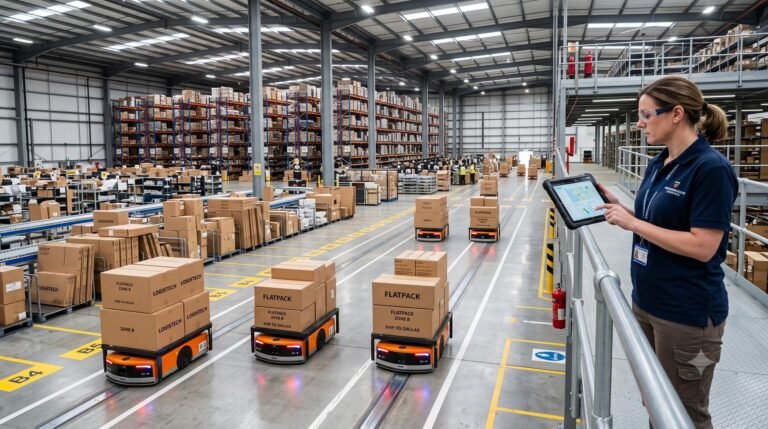
Supporting trillions of dollars in physical goods requires an intensely sophisticated logistics network. E-commerce operators are investing heavily in automated warehousing, inventory management software, and predictive logistics. The application of interconnected tracking devices allows companies to monitor shipments in real-time, checking environmental variables for sensitive cargo. This level of oversight reduces shrinkage and improves overall supply chain efficiency.
Consumer expectations regarding delivery speed have forced operators to reorganize last-mile fulfillment. The demand for rapid delivery requires decentralized distribution models, positioning inventory closer to major urban centers. To navigate complex urban environments, logistics providers are testing automated distribution vehicles, customized delivery routes, and collaborative courier networks. The ability to execute reliable, rapid delivery remains a primary competitive advantage for dominant marketplace operators.
Industry Outlook and Sustainability Challenges
Looking toward the next decade, financial models project the global e-commerce market could exceed $155 trillion by 2033, assuming current growth rates persist. Achieving this valuation will require continuous investment in cybersecurity, data privacy compliance, and sustainable logistics networks. As supply chains become more digitized, the risk of cyber disruptions increases, necessitating robust defensive infrastructure.
The industry also faces mounting pressure to address the environmental impact of last-mile delivery and packaging waste. Major operators are actively restructuring their shipping models, testing electric delivery fleets, and introducing circular economy initiatives to mitigate their carbon footprint. Companies that successfully balance rapid technological integration with efficient, sustainable operations are positioned to capture the majority of future market share.
Conclusion
The global e-commerce market continues to expand as a fundamental component of the modern global economy. Driven by aggressive digitalization within business-to-business sectors, the widespread adoption of secure mobile payment systems, and significant transactional activity in the Asia Pacific region, the industry demonstrates sustained, long-term growth. As automation, customized logistics, and targeted retail technologies mature, digital commerce is expected to embed itself deeper into daily consumer habits and corporate procurement strategies worldwide.
About ACI Newswire
ACI Newswire is a media distribution platform dedicated to providing financial professionals, market analysts, and business journalists with timely corporate communications. We deliver official press releases, market reports, and strategic business announcements across major global markets. ACI Newswire connects organizations with key media outlets, ensuring that institutional updates reach relevant audiences through structured and accessible distribution channels.
Suggested Media Contact:
ACI Newswire
contact@acinewswire.com