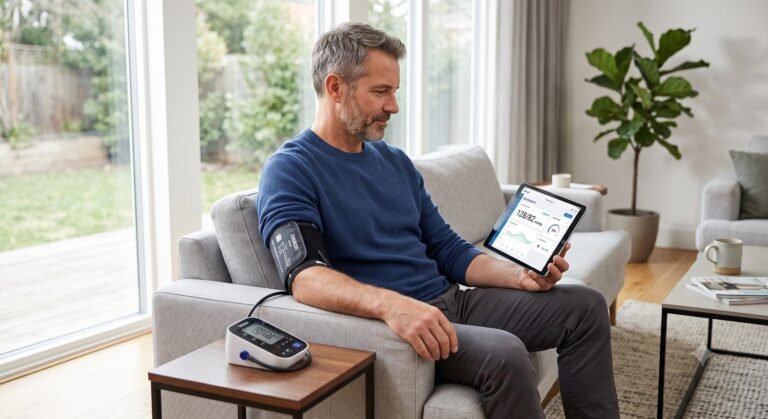

NEW YORK, UNITED STATES — September 3, 2026 (ACI Newswire) — Consumer adoption of wearable health technology has accelerated in 2026 as devices transition from basic fitness trackers to comprehensive physiological monitoring tools. With the global market projected to surpass $103 billion this year, hardware manufacturers are introducing advanced diagnostic capabilities—including over-the-counter continuous glucose monitors and artificial intelligence-powered smart rings—that provide individuals with real-time health metrics outside clinical settings.
The integration of medical-grade sensors into everyday consumer electronics is reshaping how the public approaches personal wellness. Major technology firms and specialized medical device companies are actively converging on this sector, releasing products capable of tracking heart rhythms, blood oxygen saturation, metabolic responses, and sleep architecture. As these tools become more accessible, the healthcare industry is preparing for a systemic shift toward preventative, data-driven patient care.
Market Valuations and Growth Trajectories
The financial scale of the wearable technology sector reflects this shift in consumer behavior. According to recent market analysis from Grand View Research, the global wearable technology market was valued at $92.9 billion in 2025. Projections indicate the market will reach $103.1 billion in 2026 and expand to $229.9 billion by 2033, representing a compound annual growth rate (CAGR) of 12.1%.
North America currently dominates the global landscape, holding approximately 33% of the revenue share. This geographic concentration is largely driven by rising awareness of chronic diseases, higher disposable incomes, and the presence of major technology headquarters. While wrist-wear accounted for more than half of the market share in the previous year at 51.4%, alternative form factors such as smart rings, biometric clothing, and transdermal patches are capturing a growing portion of consumer spending.
Industry analysts note that consumer electronics manufacturers are aggressively pivoting toward healthcare applications to offset plateauing smartphone sales. By embedding clinical capabilities into their ecosystems, these companies can establish recurring revenue models through subscription-based software that interprets the hardware’s data.
The Economics of Wearable Tech: Hardware vs. Subscriptions
The business model of wearable health technology is fundamentally shifting from one-time hardware purchases to recurring software subscriptions. Initially, consumers bought a device and received all companion app features at no additional cost. However, as the analytics have become more sophisticated—requiring server-side processing and advanced machine learning algorithms—manufacturers are placing premium insights behind paywalls.
For example, many prominent smart ring and fitness band companies now charge monthly fees ranging from $5 to $30. These subscriptions provide users with deep dives into sleep architecture, illness prediction algorithms, and personalized fitness coaching. Market analysts observe that this transition allows companies to maintain steady cash flow between hardware upgrade cycles, which have lengthened as devices become more durable and feature-complete.
While some consumers have resisted the subscription model, citing the high initial cost of the hardware, the continuous rollout of new data-driven features has kept retention rates high among health enthusiasts. Companies that choose not to charge monthly fees frequently use this as a competitive marketing advantage, highlighting the divide in industry monetization strategies.
Over-the-Counter Medical Devices Expand Access
A defining trend of late 2025 and 2026 has been the commercial availability of over-the-counter continuous glucose monitors (CGMs). Devices like the Dexcom Stelo and Abbott Lingo, which previously required a physician’s prescription, are now marketed directly to consumers. These biosensors, worn as small patches on the upper arm, measure interstitial fluid glucose levels in real time and transmit the data to a smartphone.
Initially developed for diabetes management, CGMs are increasingly utilized by athletes and health-conscious individuals aiming to optimize their metabolic health. The monitors provide immediate feedback on how specific foods, sleep patterns, and physical activities affect blood sugar stability. Retail pharmacies and direct-to-consumer websites report strong initial sales for these unprescribed systems.
Public health experts suggest that while broader access to metabolic data could help curb the rising rates of prediabetes, it also requires adequate user education. Without proper context, continuous monitoring can lead to unnecessary medical anxiety over normal glucose fluctuations that occur naturally after meals or during intense exercise.
Smart Rings and the Evolution of Form Factors
As consumers seek more unobtrusive tracking methods, smart rings have emerged as a high-growth category within the wearable ecosystem. Companies like Oura, which released the widely adopted Oura Ring Gen 3 and Gen 4, demonstrated that consumers are willing to invest in screenless wearables focused entirely on background health data collection.
In recent years, Samsung validated the form factor with its Galaxy Ring. Other manufacturers, including RingConn, Ultrahuman, and Movano Health, have introduced competing products that track heart rate variability (HRV), skin temperature, and sleep cycles. These devices typically weigh under six grams and feature battery lives lasting up to a week, solving the daily charging requirements that often plague traditional smartwatches.
The miniaturization of sensors—including photoplethysmography (PPG) and infrared temperature readers—allows these rings to capture accurate biometric data from the densely vascularized fingers. This shift from the wrist to the finger represents a broader industry movement toward passive data collection, where the technology fades into the background of daily life rather than demanding active engagement via a digital display. Furthermore, new research into sweat-based sensors suggests that future rings may soon measure glucose, ketones, and alcohol levels without the need for needles or patches.
Regulatory Approvals Drive Mainstream Trust
The growing legitimacy of consumer health wearables is closely tied to their recognition by regulatory bodies. Over the past few years, the U.S. Food and Drug Administration (FDA) has granted clearances for several software-as-a-medical-device (SaMD) applications hosted on consumer hardware.
Major consumer electronics manufacturers have secured FDA clearances for features such as electrocardiogram (ECG) applications, atrial fibrillation (AFib) history tracking, and sleep apnea detection. By achieving these regulatory milestones, consumer electronics companies can legally market their devices as legitimate health-monitoring tools rather than mere lifestyle accessories.
This regulatory backing has prompted some health insurance providers to subsidize the cost of smartwatches and fitness trackers for policyholders. Insurers view the devices as preventative tools capable of detecting early warning signs of cardiovascular or respiratory issues, potentially reducing long-term hospitalization costs. Consequently, the line between consumer electronics and regulated medical equipment continues to blur.
The Role of Artificial Intelligence in Health Analytics
Modern wearables can generate more than 500 unique data points per user daily. While raw metrics—such as a sudden drop in heart rate variability or a slight increase in baseline skin temperature—can indicate the onset of illness, the sheer volume of information can overwhelm the average consumer. To address this, manufacturers are deploying artificial intelligence to interpret the data.
Companies are shifting their software interfaces from static dashboards to analytical platforms. Instead of presenting a chart of nightly sleep stages, the software now cross-references sleep data with daytime activity and stress levels to generate personalized behavioral recommendations. Algorithms calculate recovery scores and readiness metrics, advising users on when to rest and when to exert themselves.
Furthermore, female health tracking has seen significant advancements through machine learning. Wearables are utilizing basal body temperature shifts and resting heart rates to predict menstrual cycles and fertility windows with increasing accuracy. These models transform disparate biological signals into cohesive, actionable health narratives.
Corporate Wellness and Insurance Integration
Beyond individual consumer purchases, employers and health insurance companies are becoming major distributors of wearable technology. Corporate wellness programs increasingly offer subsidized smartwatches and fitness bands as incentives for employees to maintain active lifestyles. These programs often tie premium discounts or financial rewards to verified physical activity, such as maintaining a minimum step count or attending a certain number of gym sessions per month.
For insurance providers, the calculus is straightforward: proactive health monitoring reduces the frequency of catastrophic health events. Early detection of atrial fibrillation through a wrist-worn ECG can prompt a cardiology visit, potentially preventing a costly and life-threatening stroke. Similarly, sleep apnea detection can lead to interventions that lower the risk of hypertension and heart disease.
However, this integration introduces questions regarding data ownership and employment equity. Labor advocates and privacy watchdogs argue that employees should not be penalized—either through higher premiums or workplace discrimination—if they choose not to share their continuous health data with their employers. Clear guidelines regarding data anonymization and voluntary participation remain central to the expansion of corporate wellness initiatives.
Data Privacy and Clinical Adoption Challenges
The proliferation of personal health tech has inevitably raised concerns regarding data privacy and the security of sensitive biometric information. Wearable manufacturers collect vast databases of continuous physiological data, creating prime targets for cyberattacks. Regulatory frameworks across North America and Europe are being scrutinized to ensure they adequately protect consumer health data generated outside traditional medical environments.
Simultaneously, the medical community is grappling with how to integrate this influx of patient-generated data into clinical practice. While physicians acknowledge the value of long-term biometric baselines, electronic health record (EHR) systems are largely unequipped to ingest continuous streams of wearable data. Moreover, doctors express concern regarding the liability of monitoring patient-generated alerts and the potential for false positives to strain already burdened healthcare facilities.
Industry consortia and software developers are working to create standardized application programming interfaces (APIs) that can synthesize wearable data into concise, clinically relevant summaries for medical professionals. Bridging the gap between consumer hardware and institutional healthcare infrastructure remains a primary objective for the sector over the next decade.
Industry Outlook and Preventative Care Models
As 2026 progresses, the wearable health technology market shows no signs of deceleration. The ongoing convergence of advanced hardware, software interpretation, and regulatory validation is establishing a new standard in personal health management. Consumers are taking a more active role in monitoring their physiological baselines, moving away from reactive medicine toward a proactive, preventative approach.
Future developments are expected to focus on non-invasive blood pressure monitoring, hydration tracking, and further miniaturization of continuous biomarker analysis. As these technologies mature, they will likely become standard components of remote patient monitoring programs, chronic disease management, and everyday wellness routines.
The financial projections and rapid product iterations underscore a fundamental change in consumer expectations. Health tracking is no longer an optional feature; it is becoming a baseline requirement for consumer electronics. As the ecosystem matures, the companies that can effectively translate complex physiological data into clear, secure, and medically relevant insights will command the largest share of this expanding global market.
About ACI Newswire
ACI Newswire is a global press release distribution platform serving corporate communications professionals, financial institutions, and public relations agencies. The platform distributes corporate announcements, financial disclosures, and industry news directly to global media outlets, financial terminals, and syndicated news networks. ACI Newswire provides organizations with an established infrastructure to reach journalists, investors, and industry stakeholders worldwide.
Media Contact
ACI Newswire
contact@acinewswire.com